Blog
Practical advice for dropshipping shops
How to start, pick suppliers, set prices and stop losing time to manual work — no fluff, with numbers.
Category mapping that learns from your own catalog
How the AI suggests one of your categories for a supplier category: from sample products, your whole tree and your earlier mappings, with a reason and alternatives.
Read →Manage your supplier catalog by chatting with Claude or ChatGPT
Categories, pricing rules, translations and product approvals now take one sentence to your AI assistant. How the Unified Suppliers MCP connection works and how to set it up.
Read →Dropshipping in Lithuania 2026: how to start, taxes and suppliers
Everything you need to know about dropshipping in Lithuania in 2026: legal form, income tax and VAT thresholds, where to sell, choosing EU suppliers and a 30-day start plan.
Read →What Manual Supplier Price Updates Really Cost: Calculate It for Your Store
"I do it myself, so it costs nothing." That's how most store owners think about their weekly supplier file routine. This post gives you five formulas to turn that work into euros — and shows where the break-even point really is.
Read →
How to Prepare for the Autumn–Christmas Season: Update Your Supplier Catalogs Early
The biggest ecommerce season isn't won in November — it's won in August, when you update supplier catalogs, fix stock synchronization, and check data quality. A practical preparation plan for dropshipping stores.
Read →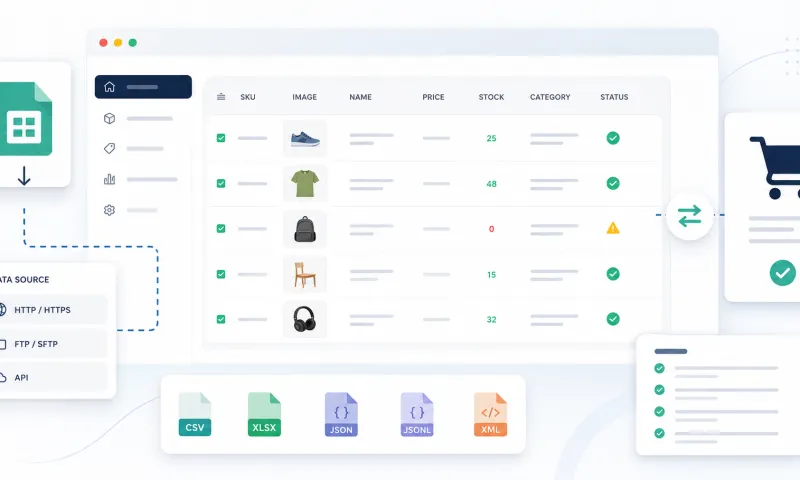
What Suppliers Need to Prepare Before Integration
A practical checklist for suppliers preparing their product catalog for automated integration — required fields, file formats, API requirements, and how to handle variants correctly.
Read →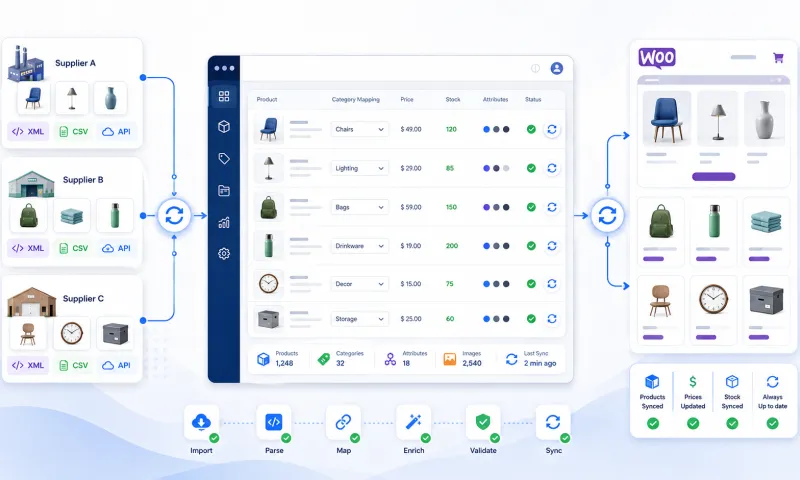
WooCommerce Product Import from a Supplier: How to Automate XML, CSV, and API Data
Read →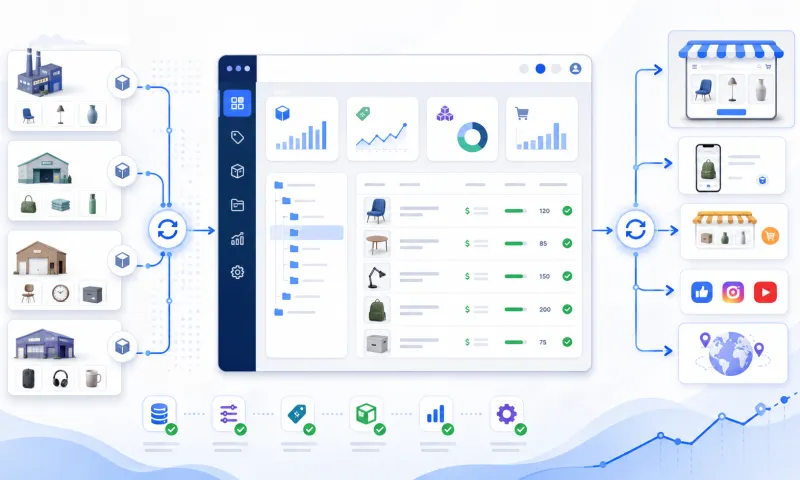
How to Grow Your E-Commerce Product Catalog with Suppliers Without Losing Control
Read →Less manual work. More sales.
Your suppliers' products in your shop — translated, with your margin and always up-to-date stock.